$2.3 Million Invested to Strengthen Columbia Basin Ecosystems
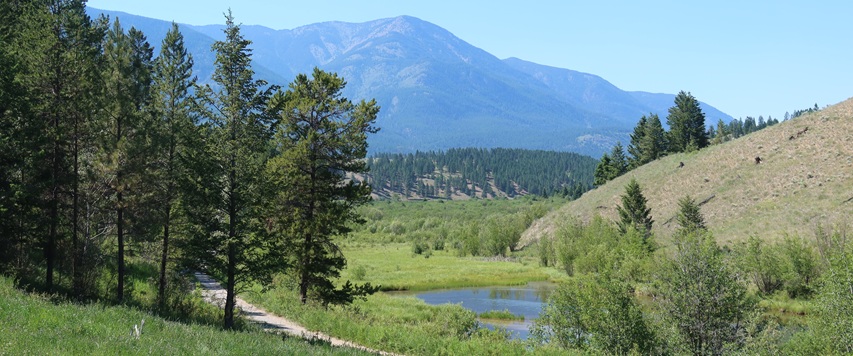
The Trust has supported 40 large-scale and small-scale projects since launching the Ecosystem Enhancement Program in 2017. Photo courtesy of the Nature Conservancy of Canada.
Six ecosystem enhancement projects—four large-scale, multi-year initiatives and two smaller-scale efforts—are moving forward across the Columbia Basin with $2.3 million in support from Columbia Basin Trust. The projects focus on improving the health, resilience and long-term sustainability of forests, brushlands and aquatic ecosystems.
“These projects, along with dozens we’ve supported over the years, are helping ensure Basin ecosystems thrive for future generations,” said Johnny Strilaeff, President and Chief Executive Officer, Columbia Basin Trust. “They focus on long-term, on-the-ground actions with meaningful, measurable results, and help strengthen our natural environment as the climate continues to change.”
Through its Ecosystem Enhancement Program, the Trust is investing $2.3 million in four large-scale, multi-year projects alongside two smaller-scale, community-based initiatives. Since launching the program in 2017, the Trust has committed nearly $23 million to 40 ecosystem enhancement projects. See all projects at ourtrust.org/eep.
See this year’s small-scale and large-scale project backgrounders for details.
Restoring Dove Hill through Indigenous-led land stewardship
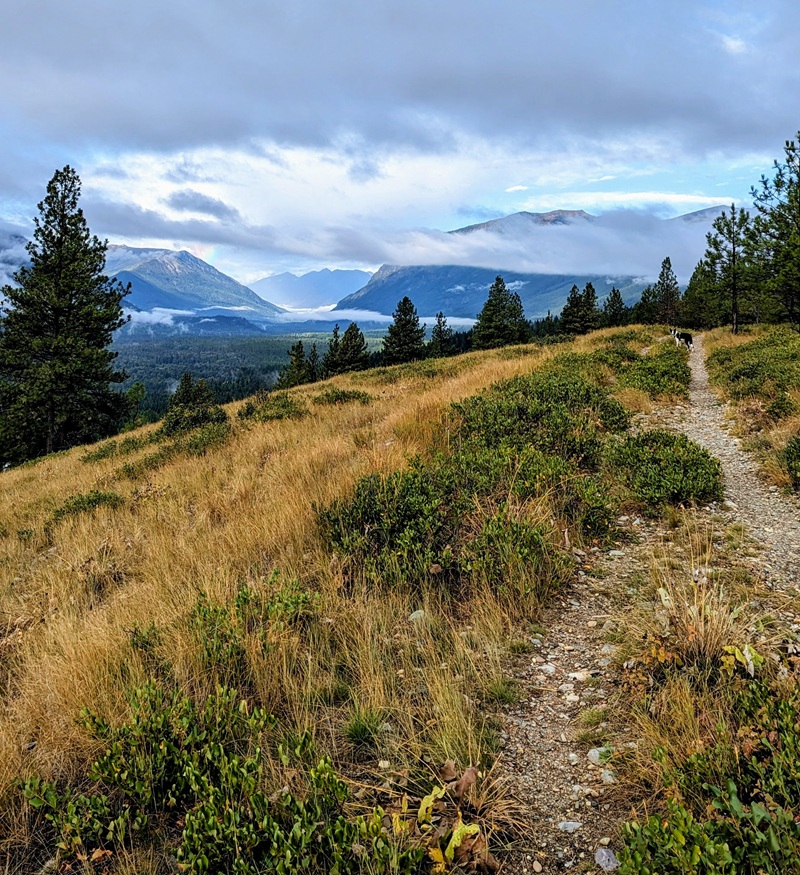
Near Castlegar, Dove Hill is well known for its popular hiking trail overlooking snɬuxʷqnm (Castlegar), and its views of the nt̕əl̕txitkʷ (Kootenay River) below Kootenay Lake and ntx̌ʷitkʷ (Columbia River) below Arrow Lake. As the hill has been impacted by fire suppression and invasive species, the Okanagan Nation Alliance is undertaking a five-year project to restore 26 hectares of red-listed brushland and open forest.

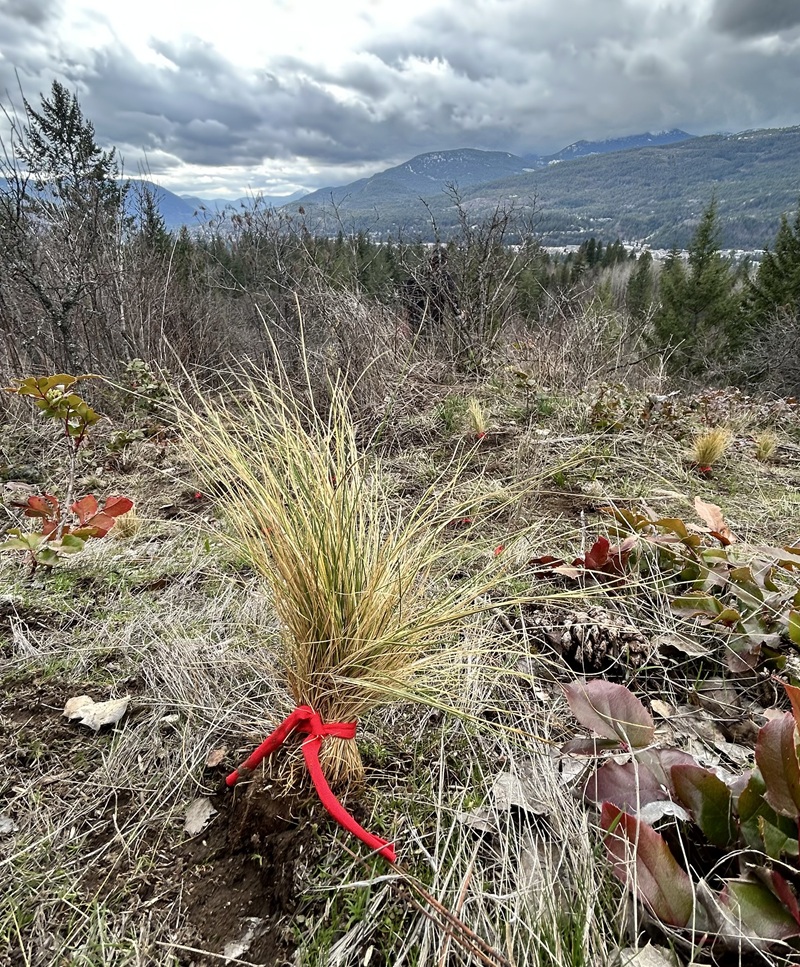
Delivered in collaboration with the Osoyoos Indian Band, BC Wildfire, the Central Kootenay Invasive Species Society and other partners, the project includes forest thinning, prescribed fire, invasive plant management and the re-establishment of native and culturally important plants. This work will increase the resiliency of this important brushland ecosystem and, in turn, improve habitat for ungulates, species at risk such as p̓aʕs (common nighthawk) and culturally important plants like síyaʔ (saskatoon). It will also restore wildfire resilience in a historically fire-adapted landscape.
“This project supports the Syilx principle of suxwtxtəm, our inherent responsibility as caretakers of the land, and incorporates Syilx ecological knowledge and western science to inform our work,” said Alysia Dobie, tmxʷulaxʷ (Land) Technician, Okanagan Nation Alliance. “The aim is to enhance brushland health, protect native plant diversity and restore fire resiliency in a valued ecosystem to the benefit of both wildlife and community.”
Working to Restore Natural Hydrology
Marion Creek flows through the Thunder Hill Ranch Conservation Area and into Columbia Lake, north of the Village of Canal Flats. Here, the Nature Conservancy of Canada is leading a five-year project on 12 hectares to restore interconnected wetlands and upland habitats, returning more natural flow dynamics to the creek.
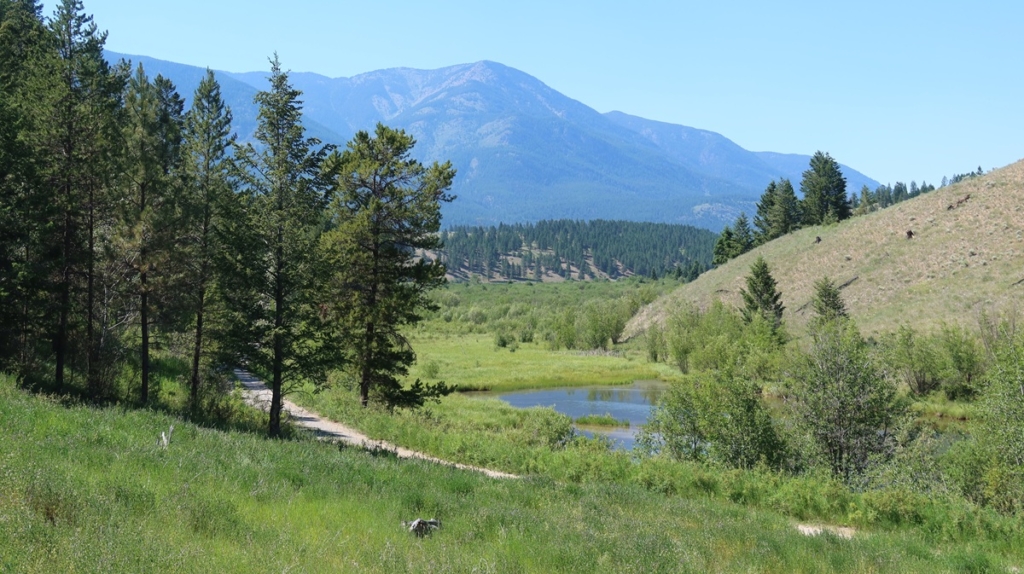
Activities include creating a mosaic of wetlands, restoring the channel and revegetating riparian and upland areas. Together, these actions will improve habitat for wildlife such as westslope cutthroat trout and other at-risk species, including American badger and western painted turtle, while strengthening climate resilience across the watershed.
“The restoration project will benefit the broader Marion Creek Watershed, which covers over 3,000 hectares, plus create beneficial ripple effects downstream, expanding freshwater habitats for westslope cutthroat trout and providing essential habitats for waterfowl and other wildlife,” said Richard Klafki, Program Director. “Improving and restoring wetland and stream habitats along Marion Creek is critical to ensure long-term climate resilience for this system.”
Rebuilding beaver habitat to strengthen aquatic ecosystems
Sina (beaver) populations on the West Bench near ʔaknuqⱡuk (Golden) have been declining, contributing to reduced water retention across local ecosystems.
Within Ktunaxa understanding of ʔa·kxam̓is q̓api qapsin (all living things), beavers are integral to the interconnected systems that sustain the health of land and water. When ʔa·q̓ankiȼqaʔis sina (beaver dams) are no longer maintained, water levels and summer stream flows decrease, affecting the long-term health of wetlands, streams and the many species that depend on them, particularly during periods of drought and wildfire.
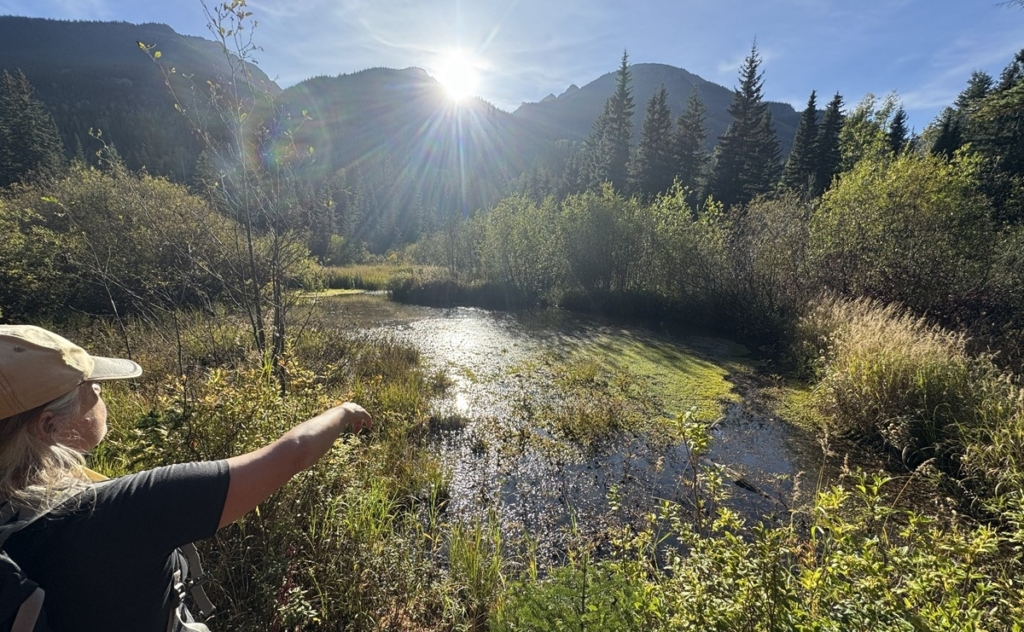
Working with regional partners, including ʔakisq̓nuk First Nation, Wildsight is leading a five-year project spanning 16 hectares to support beavers and the wetlands they maintain. Project activities include manually enhancing existing beaver dams and planting preferred food sources such as ʔa·quⱡuk̓pak (willow) and ʔa·kⱡumak (aspen). Together, these actions aim to improve water retention, enhance habitat and strengthen ecosystem resilience in a changing climate.
“Beavers are a powerful example of how animals can shape plant communities and the physical environment to create more productive ecosystems,” said Graeme Lee Rowlands, Director of Water and Climate, Wildsight. “Healthier beaver populations increase resilience to natural disturbance, improve water retention critical to freshwater systems, and provide natural fire breaks across the landscape.”
Restoring open forest structure in St. Mary’s Valley
The Lower St Mary’ Valley near Kimberley is an important wintering ground and movement corridor for wildlife in and out of the Rocky Mountain Trench. Many open-forest ecosystems in the valley have missed numerous fire cycles and become overcrowded with suppressed Douglas fir and other vegetation. These conditions restrict wildlife movement and forage availability, while also increasing wildfire risk.
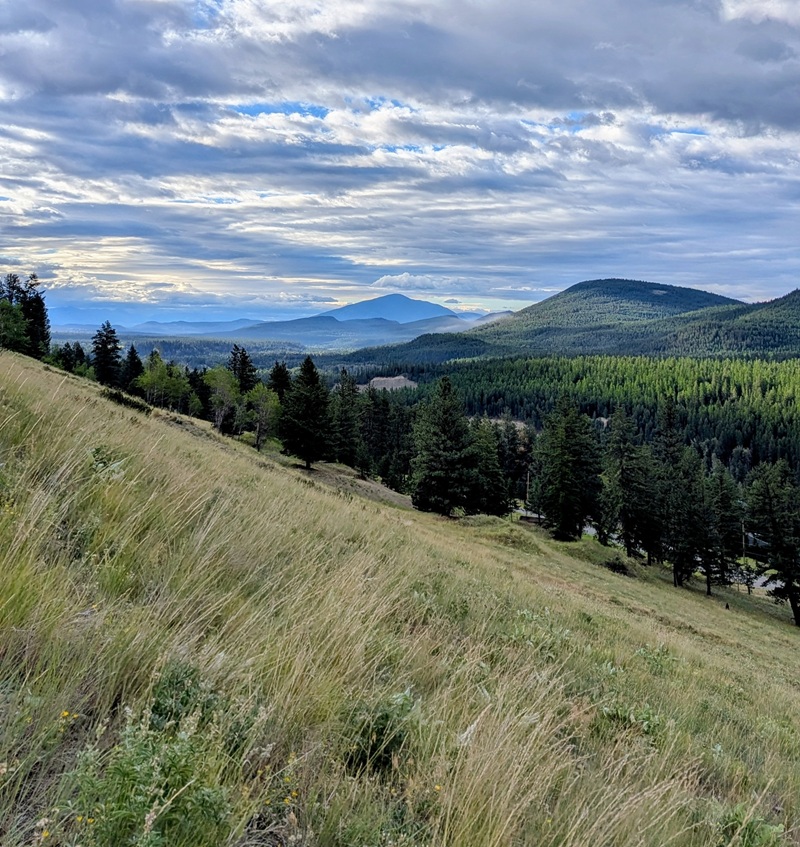
With a range of partners, Wildsight is leading a five-year project on 120 hectares to thin dense understory vegetation and carry out prescribed burns. The work will thin the forest, recycle nutrients on the forest floor, increase light and snow penetration through the forest canopy, and stimulate the regeneration of forage plants. It will also improve ungulate movement corridors between the valley bottom and upland forest.
“By the end of the project, the treated areas are expected to support a more open, diverse and resilient forest structure,” said Tim Chapman, Program Manager, Wildsight. “This landscape-scale approach will improve habitat quality and strengthen ecological connectivity, ultimately enhancing the forest’s ability to withstand future disturbances.”
Supporting local ecosystem enhancements
In addition to large-scale initiatives, the Trust is supporting two small-scale ecosystem enhancement projects focused on local, community-driven action.
Near Hills, the Valhalla Foundation for Ecology is enhancing two hectares of land at Snk’mip Marsh through revegetation and the creation of pollinator gardens. At Yaq̓it ʔa·knuqⱡi’it, Tobacco Plains Indian Band is restoring five hectares of forest ecosystem through prescribed burning and invasive species management, while building community capacity to reduce wildfire risk. Together, the projects represent $72,900 in funding and support ecosystem health at a local scale.