Bringing Balance Back To Wigwam Flats
Partners are working together to restore a unique landscape in the Elk Valley.
For people like Brad Mason, Wigwam Flats near Elko is more than just a place to visit— it’s where he and his family have spent meaningful time outdoors. That personal connection is shared by many who value this open-forest grassland, an ecologically important habitat that supports wildlife such as Rocky Mountain bighorn sheep.
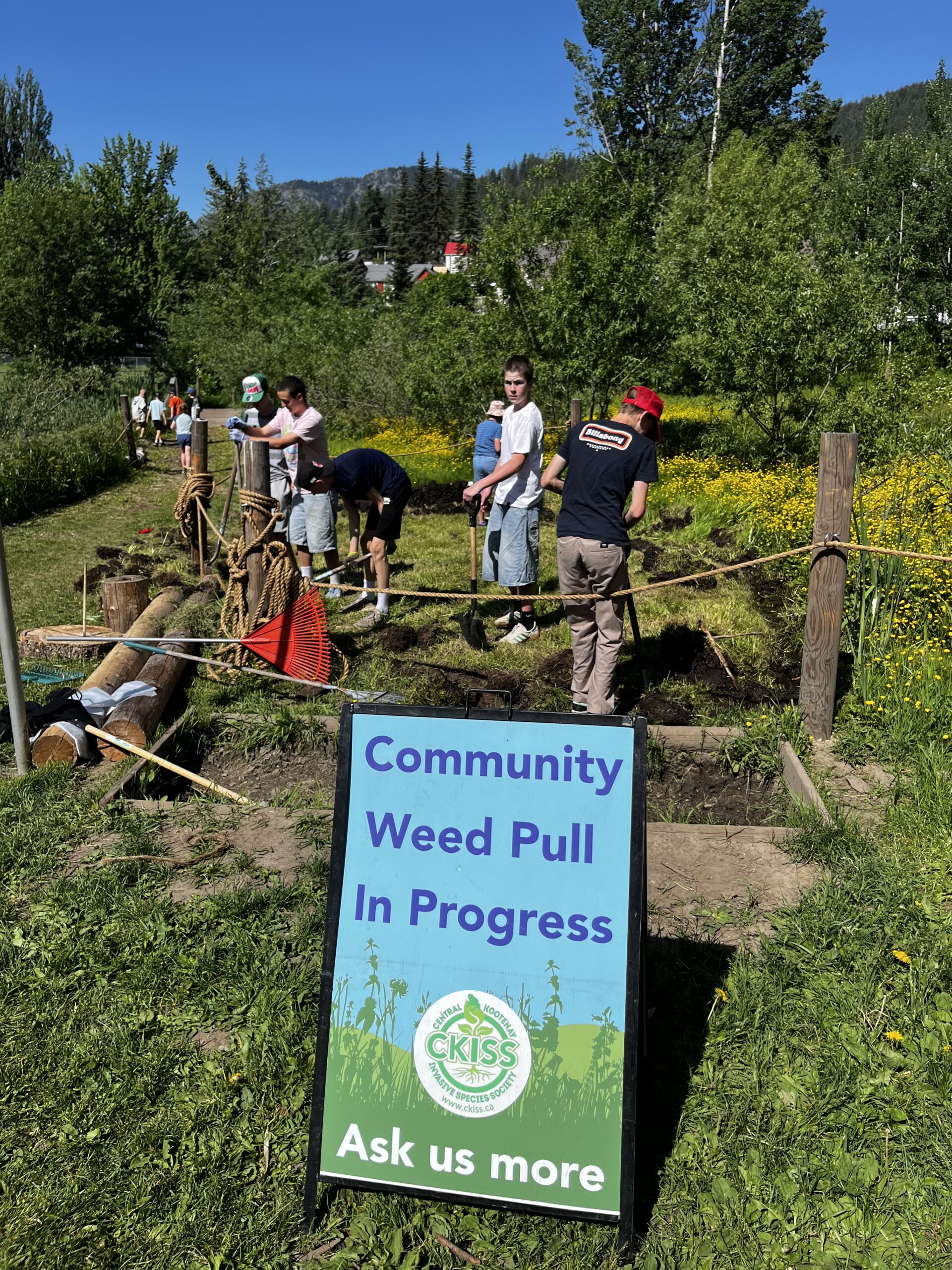
That connection is also what brought Mason out in spring 2025, alongside more than 20 other volunteers to give back to the landscape and the wildlife that depend on it, even though it meant travelling from his home in the Slocan Valley. “I felt compelled to volunteer and give back to an area that means so much to me and my family,” he says.
Popular for hiking and birdwatching, Wigwam Flats also plays a critical ecological role, providing forage and key movement corridors for wildlife. After decades of fire suppression altered the natural balance of the landscape, continued restoration work is required to restore ecosystem health.


To build on efforts that have already taken place and accelerate work done by the Province of British Columbia and other parties, the Fernie Rod and Gun Club (FRGC) initiated a five-year ecosystem restoration and enhancement project spanning 250 hectares, with funding from Columbia Basin Trust. The project is managed by Todd Penke of Biodiversity Pathways with guidance, oversight and financial support from the Province of BC and Yaq̓it ʔa·knuqⱡi’it First Nation. Other partners include The Nature Trust of British Columbia, Nature Conservancy of Canada, East Kootenay Invasive Species Council and Rocky Mountain Trench Natural Resource Society. In addition to Columbia Basin Trust, over 20 organizations and clubs have contributed matching funds.
ON–THE–GROUND RESTORATION
Started in 2025, the main goal of this project is to improve ecosystem health, returning the landscape to a healthier, more natural state. This involves increasing both the quality and quantity of forage for animals like deer, sheep and elk, while improving sightlines so they can better detect predators like cougars and wolves. Reducing wildfire risk and building long-term resilience to climate change are other important benefits.
For Joe Caravetta, who grew up in Fernie, the work is deeply personal. “I was fortunate enough to be introduced to this area as a young fellow,” he says. “It became one of my favourite places.”


Those early encounters helped inspire Caravetta’s career as a conservation officer. Today, as a member of the FRGC, he is helping oversee the restoration efforts at Wigwam Flats. These include reducing tree density, improving sightlines through pruning, removing invasive species such as St. John’s wort, applying seed and fertilizer to enhance existing grasslands, creating wildlife trees, and using monitoring tools like wildlife cameras and collars to better understand how animals are using the area and responding to habitat improvements.
EVERYONE PITCHING IN
“The number of partners and people involved really shows how important the area is,” Penke says. “All of these efforts are meant to bring the habitat back into balance.”
Volunteer days have brought together individuals and groups, including other rod and gun clubs. Local schoolchildren have also played a role, working with the FRGC to build birdhouses for species like bluebirds and swallows—small but meaningful contributions that are now part of the landscape. In May 2026, the volunteer community stepped up with over 58 people coming out to support this project.
For Mason, his day volunteering left a lasting impression.
“The most memorable experience was the feeling of optimism I left with, after seeing so many different groups working together on a well-planned project.”


SUPPORT THAT MAKES IT POSSIBLE
A major funder of the project is Columbia Basin Trust, through its Ecosystem Enhancement Program. The program supports projects that deliver meaningful, measurable and long-lasting landscape-scale impacts that strengthen the health and resilience of the Columbia Basin’s natural environment in a changing climate.